INTRODUCTION
Back in 2004, during a 6th form film studies
class, I and a
room full of my classmates were shown the 2004 Studio Ghibli film
Spirited
Away, directed by Hayao Miyazaki. This was the my first encounter with
Ghibli
and I believe any Japanese film. The class was one hour long, so we had
to stop
half way through the movie. I, I think more than anyone else there, was
mesmerised from the start and spent the next few days waiting for the
next
class so we could finish it. At this point in my life I already liked
animation
and had grown up watching Dragon Ball Z and playing Japanese video
games, so I
think I was predisposed to enjoy it more than others. I remember the
animation
absolutely blowing my mind - I didn't know it could be this detailed,
colourful
and imaginative. Not only that but it was like being suddenly dropped
into the
alien world of Japanese folklore, completely different from the tropes
and
structures that I was so used to in Western media. It turned out many
of my
classmates were less interested and come the next lesson we didn't
actually
finish the film, but my film studies teacher being the legend he was*
allowed a
few of us to watch the rest of it during a free period. Thus began a
love of
Studio Ghibli and Hayao Miyazaki that has lasted over 20 years for me.
Since then Spirited Away has become my favourite
film of all
time. I have watched it through many times and seen at least the start
literally hundreds of times (its a great film to fall asleep to). The
same goes
for other Ghibli favourites such as Howl's Moving Castle, Whisper of
the Heart
and Ponyo. I collected all the movies on DVD back when I was still a
teenager
or in my early 20s. I took my girlfriend at the time to see Howl's
Moving
Castle at the (tiny independent) cinema when it released and I was
lucky enough
to see the Boy and The Heron in the cinema when that released too. The
point
is, I adore Studio Ghibli movies, they have been a big part of my life
and I've
seen them all, some many, many times. Miyazaki is one of my heroes.
However, it occurred to me a few years ago that
although I
know some Studio Ghibli films inside out, some of them I have only seen
once or
twice and don't remember very well. I guess over the years I've ended
up
falling back on the old favourites and also had a partner for a long
time that
wasn't as interested in watching some of the others. That's why I
decided I'd
like to watch every single movie in order - phone away, full attention
on each
film - to fully appreciate each one and see the evolution of their
films in
context. So now the winter months are here again it seems like a good
time to
begin this endeavour. There will be 24 films in total and as I go I
will share
some thoughts on each film here and although I fully expect this to
never be read by anyone other than myself, I'll try to keep it brief
and spoiler-free.
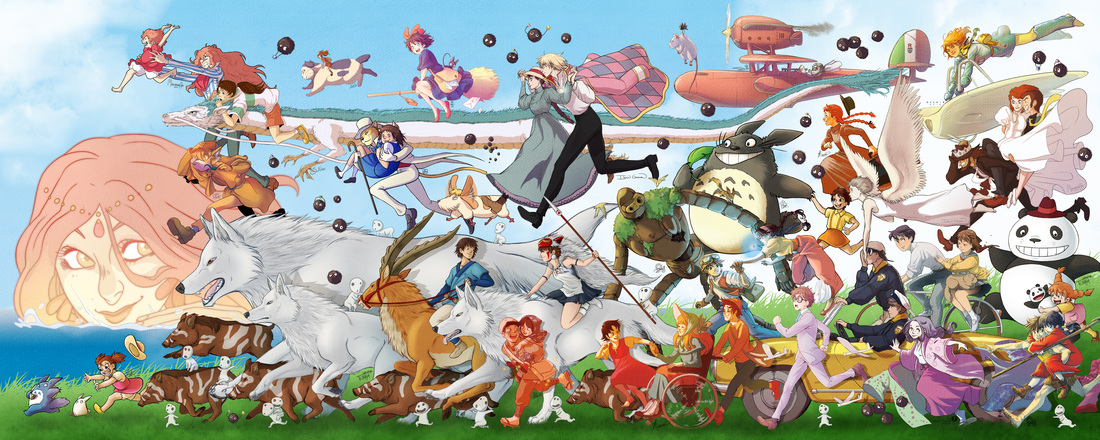
NAUSICAA OF THE
VALLEY OF THE WIND (1984)
OK this isn't actually a Studio Ghibli movie but
most people
accept that this is where it starts, and as we are at the very
beginning of the
Ghibli story I'll give a quick history lesson and explain why. This is
actually
the second film written and directed by Hayao Miyazaki, but the first
based
entirely on his own original world (the first was The Castle of
Cagliostro 5
years prior, which was based on the Lupin III manga and which I have
never
actually seen; I think I'll watch that as a bonus after I've completed
this
marathon), in fact it is based on his own manga series. The production
team
includes many people that went on to work at Studio Ghibli after it was
founded
due to the success of this film including Isao Takahata, one of the
studio
co-founders and it is also the first time Miyazaki worked with composer
Joe
Hisaishi, whom he collaborated with for the rest of his career. The
film
features the feel, style and many of the themes that became hallmarks
of
Miyazaki and Studio Ghibli. Also, the rights are owned by Ghibli and
its
included in the Ghibli DVD/Blu-Ray series, so its good enough for me
and
everyone else.
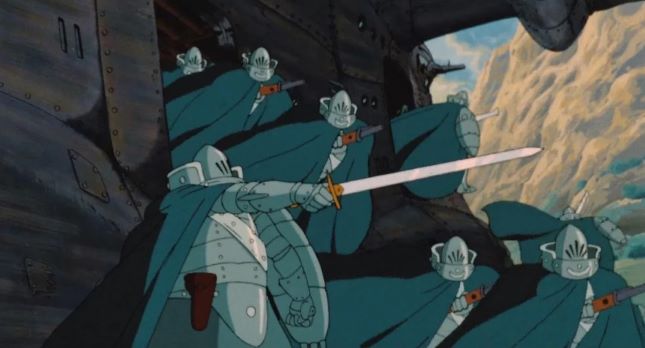
Onto the movie itself. It was nice watching this with fresh eyes and really paying attention to it for the first time in years. It strikes me how it feels so clearly like a Ghibli movie but still feels different to many of the later works at the same time. Despite the fact that there are many scenes of war and violence, this film has a calm feel to it and exhudes that intanginble Ghibli "heart". The use of music is sparse and the colour pallet is more muted than later films. It definitely has an 80s feel to if that makes sense. From the very start here we are presented with what will become a Miyazaki hallmark - airships and aeroplanes - and the designs here are fantastic, exhuding a low-tech, almost organic feel. The character designs are also wonderful, with all the men sporting magnificent bushy moustaches and I have to mention the armour in this movie as I love it, they look so chunky and shiny and they all have awesome capes.
A couple more thoughts on this before I wrap up
(these are
supposed to be brief!). The English dub cast is fantastic, with Patrick
Stewart, Alison Lohman, Shia LaBeouf, Uma Thurman and Mark Hamill among
others.
As mentioned the music is by Joe Hisaishi but it is sparse and
atmospheric
rather than being a lush score. There is one particular piece with
children
chanting which is frankly quite creepy, but certainly adds to the
atmosphere of
the film. And finally I just want to acknowledge that this is a 2 hour,
hand-drawn, animated film - far beyond the length and in my opinion
quality of
hand-drawn films by peers such as Disney.
In three words I find this movie sad, touching and
powerful.
It is a gorgeous yet harrowing portrayal of humanity at war against
nature and
what this could, but shouldn't, lead to. A stunningly beautiful movie
and I
suspect those will be words I use many times throughout this marathon.
An
extremely strong start.
*Sidenote - he also showed us Rear Window which is
my joint
favourite movie along with Spirited Away and Lost in Translation, as
well as
many other amazing films. He really did have a hand in shaping my taste.
CASTLE IN THE SKY
(1986)
Well I thought we were off to a strong start with
Nausicaa
but this film raises the bar in every single department. I genuinely
had a huge
smile on my face at various points throughout due to how wonderous and
*magical* this film is.
To begin with, a bit of context on my part - I
thought I had
seen this film many times, but I realised during this viewing that I
have not,
notwithstanding the numerous times I've watched the first 15 minutes
and fallen
asleep. I think the only time I properly watched it through and paid
attention
was 18 or so years ago so this felt like watching it for the first
time, and
that made it fantastic experience.
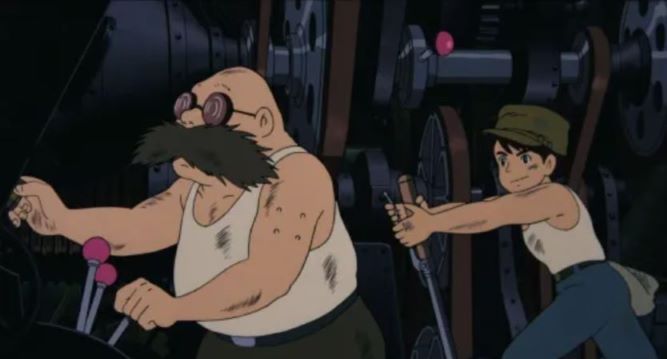 Story-wise, we again have the
young but brave
female lead,
this time accompanied by her male sidekick Pazu as they search for the
ancient
Castle in The Sky. The friendship/kind-of love story between the two
lead
characters is lovely and heart-warming, and done with such a human
touch that
it feels real and not corny. There are a family of sky pirates also
looking for
the castle, as well as the army, and the sky pirates in particular are
hilarious. I love how they go from nasty villains to sweet, loyal
allies. The
main villain in this film is genuinely evil and villainous in a very
Indiana
Jones kind of way.
Story-wise, we again have the
young but brave
female lead,
this time accompanied by her male sidekick Pazu as they search for the
ancient
Castle in The Sky. The friendship/kind-of love story between the two
lead
characters is lovely and heart-warming, and done with such a human
touch that
it feels real and not corny. There are a family of sky pirates also
looking for
the castle, as well as the army, and the sky pirates in particular are
hilarious. I love how they go from nasty villains to sweet, loyal
allies. The
main villain in this film is genuinely evil and villainous in a very
Indiana
Jones kind of way.Within the first few minutes we are treated to
what is
already becoming a Miyazaki staple - aircraft, and once again the
designs are
fantastic. I especially like the little one-person hovering crafts the
pirates
use. The main pirate ship is great too with all the spinning cogs and
machinery
and steam puffing out all over the place. This movie is filled with
interesting
and creative shots and a much brighter, more varied colour pallet than
Nausicaa. I particularly love the way wind and the clouds are drawn as
strange
as that sounds. And the dragon-lightning! In the end the build up to
finally
seeing the castle is fantastic and surprising - it pays off
brilliantly. The
robots are extremely poignant and I love the noises they make.
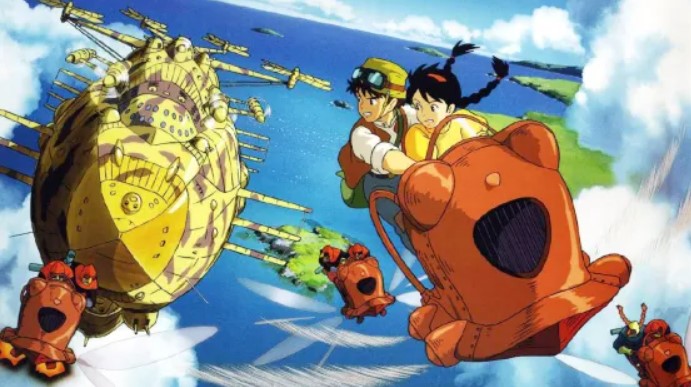
In three words I find this movie magical, fun and
adventurous. Everything about this film is virtuoso, of the highest
level of
quality and imagination. It is so much fun to watch from the very
beginning,
with no slow spots in my opinion and once again I love the ecological
message
it shares.
MY NEIGHBOUR TOTORO (1988)
“Trees and people used to be good friends. I saw
that tree
and decided to buy the house”
The year of my birth saw the release of a
double-bill of
Ghibli movies – Miyazaki’s “My Neighbour Totoro” and Takahata’s “Grave
of the
Fireflies”, which in hindsight and with the perspective gained by
watching
these films in order, seems like a remarkable thing to do for a
studio’s 2nd
and 3rd films respectively.
This is probably the first truly iconic Ghibli
film but I
must admit I was not looking forward to it. I have never been a fan of
My
Neighbour Totoro, which is completely understandable when you consider
it was
aimed at small children and I first saw it as a grown adult. It does
make me a
bit sad though that I was born the same year the film was released but
never
saw it as a child. I think I would’ve liked it. That in mind, I have to
say
this viewing – keeping in the spirit of full attention and appreciation
– won
me over.
I remember reading once that this is the result of
Miyazaki
wanting to make a film with no conflict. An engaging story with no
antagonist,
no fighting, no struggle against an opposing force. The result is a
film which
is absolutely charming and does manage to tell an engaging story as
young
sisters Satsuki (Japanese for May) and Mei (…kind of English for May)
move with
their father to a rural house and meet the eponymous Totoro, the Catbus
and
friends.
To begin with, Joe Hisaishi’s music is fantastic
and
probably the first iconic (again) Ghibli soundtrack, including the
opening
title song. One thing I have always liked about this movie is the
opening
titles with the little objects and creatures dancing at the edges and
the song
gets stuck in my head on a regular basis! The English voice acting is
again
excellent with young Dakota and Elle Fanning voicing the girls.
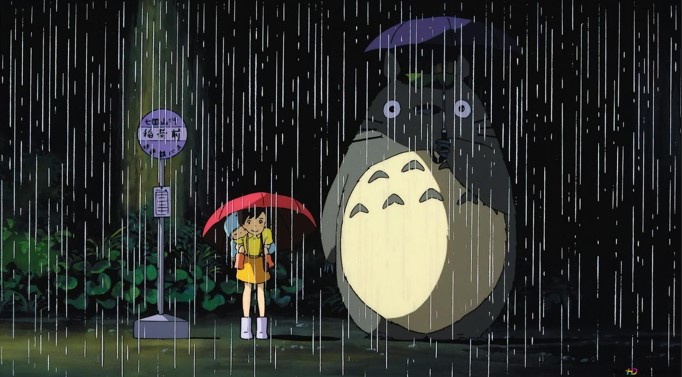
The scene that won me over in the end is when the
girls are
waiting at the bus stop in the rain. The level of animation prowess and
observational talent required to create the rain-drops hitting the
umbrella is
so impressive and the result is gorgeous. The whole scene gives an
unbelievably
cozy vibe.
Although the movie is without traditional
“conflict” it does
not mean nothing happens and there is no drama. I found it very moving
when
they find out their mum won’t be coming home from the hospital and
Sasuke is
mean to Mei, telling her to grow up. She is just a little girl and she
has been
trying so hard to be grown up just like her big sister :’(.
All in all this film achieves Miyazaki’s goal of
creating a
“delightful, wonderful film”. In my own three words I find it cute,
cozy and
lovely.
GRAVE OF THE
FIREFLIES (1988)
“Why do fireflies have to die so soon?”
And now we come to the film that I have been
dreading, as in
actually dreading. I first saw this film with my best friend and a
takeaway
pizza each. We were having a movie night and both liked Ghibli movies
but we
did not understand what we were getting into with this film. I thought
I would
never, ever watch it again, even though it is brilliant.
This film stands in very stark contrast to it’s
double-bill
sister My Neighbour Totoro; it also tells the story of two young
siblings but
under extremely different circumstances. This is Isao Takahata’s
pre-eminent
war film, a harrowing, deeply affecting yet still beautiful experience
that any
viewer will never forget.
I don’t want to over-egg the rhetoric here but
this film is
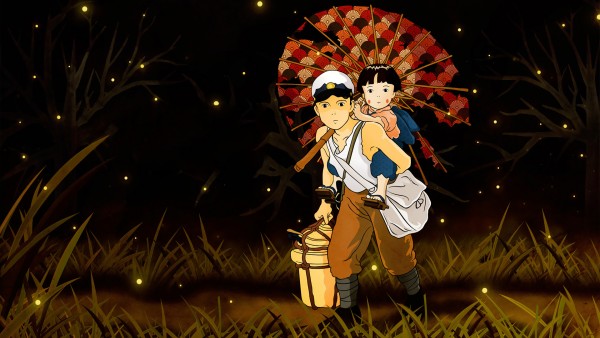
heart-in-throat from the very beginning. It opens with a young boy
starving to
death in a Tokyo train station and then immediately flashes back to
that young
boy minutes before an Allied firebombing attack takes his home, causing
him to
flee with his little sister on his back. Opening like this so you know
how it
will end is incredibly powerful. Everything that comes in-between as
the
children battle to survive on their own is heartbreaking and incredibly
powerful viewing.
This is a film that has the power to change
perspectives on
war in a way that only the best can. It illustrates who the true
victims are,
well beyond good vs bad, showing the plight of innocent - truly
innocent -
people who are assaulted by extreme violence, pain and desperation for
absolutely no reason or fault of their own. They don’t even know why
it’s
happening, or what’s really happening. And it shouldn’t be forgotten
that this
is an adaptation of a book, which is based on the author’s true story,
written
to help him process what he went through himself, and as an “apology”
to his
sister.
I’m glad I watched this film again. When it ended
I
genuinely thought “I made it”. I have thought about it every day since.
This is
a truly brilliant piece of art that holds huge power. The contrast
between this
work by Takahata and the whimsical worlds of Miyazaki show why Studio
Ghibli
became such a power-house even in it’s early days.
In 3 words – Harrowing, shocking, moving.
KIKI’S DELIVERY
SERVICE (1989)
“Stop trying. Take long walks. Look at scenery.
Doze off at
noon. Don't even think about flying. And then, pretty soon, you'll be
flying
again”
Back to Miyazaki and a much lighter tone. This is
the first of
the Ghibli movies that I have seen many, many times and know inside out
and it
was much appreciated after the incredible but difficult experience of
the night
before!
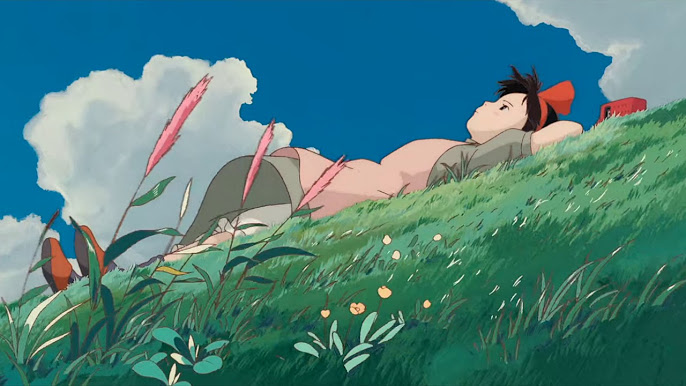
From the very start I love this movie, as it opens
with an
idyllic shot of Kiki laying in the grass near a lake listening to the
radio,
with her hair, her dress and the meadow surrounding her rippling in the
breeze
and fluffy clouds passing overhead. You have to pay attention
immediately with
this one, as an important plot point happens within the first 30
seconds – Kiki
hears a weather forecast describing light winds and a full moon, where
the presenter
says “if you’ve been planning something special, tonight might be the
night”.
This prompts Kiki to make the decision to leave home and begin her
witch
training, setting in motion the events of the film. Its nice to note
that the radio
presenter mentions the airship which becomes a major plot point at the
climax
of the film and these are the very first words spoken in the movie.
As Kiki leaves home it becomes clear that she is
barely
ready but is determined to go for it. Once again we have the classic
Miyazaki
headstrong young girl as our protagonist. I’ve always thought that Kiki
in her
blue dress looks an awful lot like Princess Sheeta from Laputa. Also
I’ve
always felt sorry for her dad here as he’s literally packing for a trip
that
Kiki cancels as she decides to leave home!
The plot of this movie has an inspirational
message which I’ve
always liked – firstly it is a story about leaving home and making your
own way
in the world which is nicely illustrated by Kiki finding a new place to
live, making
new friends, learning to fly her broom and soon opening her own
delivery
service. The more impactful message is towards the end of the film
though, where
Kiki begins to lose her powers and can no longer fly. This is a clear
metaphor
for depression or at least struggling to find or be yourself under the
pressures of the world. Thus we get one of my favourite quotes from any
Ghibli
movie , which I have already mentioned above – “Stop trying. Take long
walks.
Look at scenery. Doze off at noon. Don't even think about flying. And
then,
pretty soon, you'll be flying again”. Great advice that I personally
try to
remember.
The music in this film is once again peak Joe
Hisaishi who
delivers one of his most iconic soundtracks, although frankly I think
that
applies to 5 or 6 of his films – he really is brilliant. I love the
setting of
this film which is a coastal town in “Europe”, which is to say it’s a
clever
amalgamation of places which reminds me of several different countries
whilst
not actually being any of them specifically, such as France,
Switzerland, Czech
Republic, Germany and Belgium. The town has London buses but they’re
green and
if you have eagle eyes you can see one of them with the word GHIBLI
printed on
it at 17 minutes.
A few words on the cast of characters in this
film, who I
enjoy and all help Kiki in different ways. Firstly Kiki’s sidekick Gigi
the cat,
who makes for a nice cynical counterweight to Kiki’s blinkered
enthusiasm.
Tombo is a lovely boy who just wants to be her friend and helps bring
Kiki out
of her shell. There is the painter Ursula who is a bit of a big sister
figure
and delivers the wonderful quote above to help Kiki out of her slump
and the elderly
“Madame” who becomes a friend to Kiki rather than just a grandmother
figure. Then
of course there is Osono and her buff husband, who give Kiki a place to
live, a
job and help her start her delivery business – a truly wonderful mentor.
In three words this film is lovely, sweet and
charming.
